

Heat Loss & Efficiency estimates are just that – Estimates.
Obviously, efficiency is important but there are other considerations. Overall life cycle cost, upfront costs, repair, replacement, general maintenance, quality, history, health, comfort and aesthetics should all be in the decision-making process.
I’m not a fan of providing operating cost estimates for ThermaRay Radiant Heating Systems because it can vary greatly depending on the construction of the building, zip code, use of the space, etc. My preferred solution is to provide the customer with “Actual” data and operating costs from similar homes and buildings in their climate or in tougher climates. USA – Projects
Heat Loss & Efficiency Claims
Every manufacturer out there makes claims of efficiency. I call it small print propaganda.
Baseboards and forced air furnaces claim to be 75%-90%+ efficient and most ASHP manufacturers claim to be 200%-300% efficient. I’ve even heard now of some ground source heat pump (GSHP) manufacturers claiming to be 600% efficient. I’ve seen our electric radiant systems match and even be lower than GSHP’s, but I still wouldn’t make a claim to be 600% efficient. I’m not even sure what that means.
Like I said small print propaganda. Where’s the facts ?

Department of Energy Study
We have a study from the Department of Energy in coordination with the National Association of Home Builders that shows our Radiant Ceiling Systems to be 52% more efficient than baseboard and 33% more efficient than air source heat pumps (ASHP).
Even though it makes our Radiant Ceiling Systems look really good, if you think about it – it still doesn’t really make sense either. I call it all small print propaganda.
Most heat loss/energy calculation software models do not take radiant into account accurately and none of them take the most important part of our systems into account either – the Thermal Mass aspect of our system.
How Much Will It Cost to Heat My Building?
Most people never request an operational cost estimate for forced air, baseboard or other traditional and competing systems, but sometimes request one from us. As a rule of thumb, ThermaRay Radiant heating costs are 30%-60% less than natural gas, electric or propane forced air systems, baseboard, hydronic or infrared systems.
However, even if ThermaRay operating costs were the same or higher we still have No maintenance, Repair or the eventual Replacement of part or all of the system. It’s a healthier space, more comfortable, quiet and invisible.
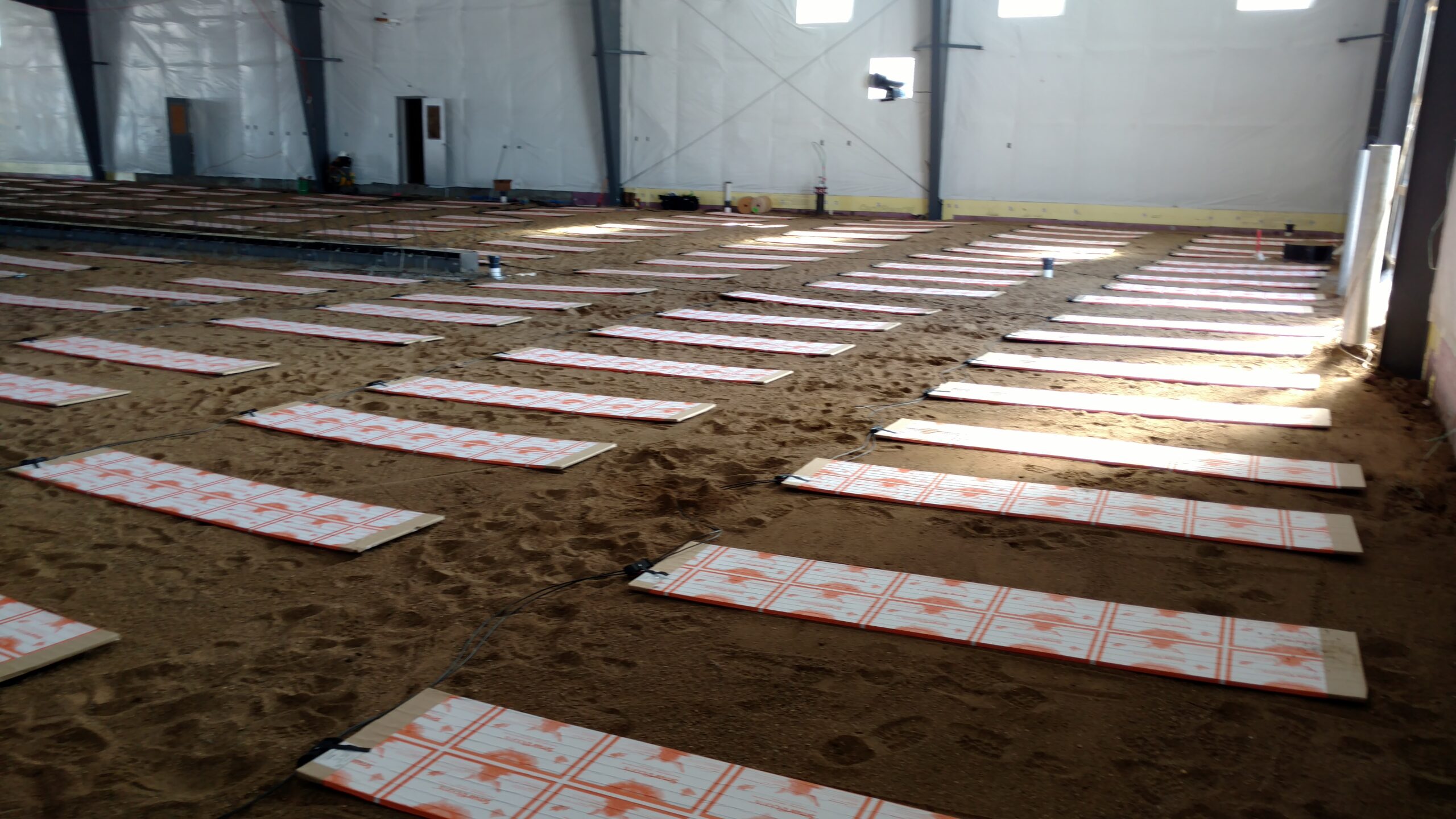
Heat loss & Efficiency numbers are great, but we have literally hundreds of buildings with the “Actual” cost to operate examples to share. I personally built a 76 x 100 (7,600 Sq.Ft.) building in 2003 with the ThermaRay Thermal Mass Floor Heating System Electric Radiant Heating Products | Thermaray Heating Solutions and tracked the kilowatt usage and operating costs for years and we never had heating bill totals over $1,300 for the entire heating season. Other buildings in the exact same complex similar in size with forced air systems were triple in cost and one was comparably 5 times more expensive to operate. That my Small Print Propaganda. Ask us for the Actual Facts and we’ll be happy to share.
My favorite rant below also ties into this video.
This building is 104,000 Sq.Ft. and the owner paid an engineering consulting firm to provide him with a report telling him the best and most energy efficient way to build his new manufacturing plant.
When I met with the owner, I had already read the 42 page report and included in the report was a comparison of our Floor Heating System to traditional roof top natural gas forced air units and a Hydronic Tubing system.
The engineering firms report showed that all three systems were about the same in operating costs, which came out to be around $96,000 per year to heat the building. When he asked what I thought of the report, I said that if he paid more than $5 for that report it was a total waste of money. Kinda funny when he told me he paid $27k for the report.
I told him that we could heat his building for less than $30,000 per year. The first heating season was 2015/2016 and the total cost was less than $16,000. This year it is trending toward around $23,000 for the entire heating season. Compared to what his so-called experts told him, we have already saved him over a half a million dollars. Ridiculous!!
Let’s Get the Facts on Your Project